Fatigue With Normal Blood Tests: What It Can Mean

A normal blood panel tells you that a short list of common problems, such as anemia or an underactive thyroid, was not found. It does not tell you that nothing is wrong. Fatigue with pain that persists after clean routine results is a recognized pattern, and one of its possible explanations is fibromyalgia, a condition our FM1® Test looks at through DNA-based immune signatures in a simple blood draw.
This guide explains what routine tests can and cannot see, what else can drive exhaustion, how clinicians work through it, and what to do next.
TL;DR
- Routine blood work checks for a handful of common causes. Normal results rule those out, not every cause of fatigue.
- Sleep problems, medications, mood, stress, hormonal changes, and conditions such as ME/CFS or fibromyalgia can all cause real exhaustion with normal labs.
- Fibromyalgia is suspected when widespread pain and fatigue last at least three months with no other explanation.
- Bring a clear symptom timeline, a medication list, and your actual lab results to your next appointment.
- The FM1 Test is a blood draw covered by Medicare and insurance, with results in about a week.
Table of Contents
- Why normal results do not mean you are imagining it
- What routine blood work can and cannot see
- What can cause fatigue and pain when labs look normal
- How clinicians work through it
- When pain and fatigue travel together: fibromyalgia
- A word from our team
- Ready to get an answer? Start with the FM1 Test
- What to do next, and when to seek urgent care
- FAQ
- Sources
Why normal results do not mean you are imagining it
Many people hear “your tests are normal” as “there is nothing wrong with you.” That is not what the numbers say. A standard workup answers narrow questions: is hemoglobin low, is the thyroid hormone off, is blood sugar high, is there a sign of infection or inflammation.
Fatigue is a much broader problem. The American Academy of Family Physicians describes fatigue as having an extensive differential, meaning a very long list of possible causes. It also separates true fatigue from sleepiness, which is the tendency to doze off. The two can feel alike but point in different directions.
The same review notes that ordering tests indiscriminately has a low yield, and that testing changes treatment in only about 5% of patients. The lesson is not that testing is pointless. It is that the right test depends on your history, an examination, and the most likely causes. When the first round is clean, the next step is usually a better question, not the same test repeated.
What routine blood work can and cannot see
A typical first round includes a complete blood count (CBC), a metabolic panel, and a thyroid-stimulating hormone (TSH) level. The AAFP lists these as reasonable starting points when evaluating fatigue. France’s national health authority, in its 2025 adult fibromyalgia guideline, suggests a similarly limited screen: CBC, C-reactive protein (a marker of inflammation), TSH, creatine phosphokinase (a muscle enzyme), and liver transaminases. Further tests are chosen from there based on your symptoms and exam.
These panels are good at catching:
- Anemia and some infections
- Overt thyroid disease
- Diabetes
- Liver and kidney problems
- Marked inflammation
They are less able to show:
- How well you sleep, including breathing interruptions at night
- The effect of your medications
- Depression, anxiety, or burnout
- Nerve problems or autonomic dysfunction, which affects automatic functions such as heart rate and blood pressure
- Immune system changes that do not show up as a high or low value on a standard panel
It is also possible for a condition such as low iron or a mild thyroid problem to be under-detected when only one marker was checked. If your results are borderline, or only a single marker was ordered, ask your clinician whether a fuller panel makes sense for you. Request a copy of the actual numbers, not only the word “normal.”
What can cause fatigue and pain when labs look normal
The AAFP’s fibromyalgia review makes a point that matters here: more than one contributor can exist at the same time, so the pattern of your symptoms and the physical exam carry real weight. Common contributors include:
- Sleep disorders. The NHS lists sleep apnea alongside iron-deficiency anemia, diabetes, an overactive thyroid, and ME/CFS as possible causes of fatigue. It also names too little sleep, stress, depression, hormonal changes, illness, and medicines as common contributors.
- Medications. The AAFP review flags medication effects, with statins and opioids as examples.
- Mood and stress. These cause genuine physical exhaustion. They are real conditions, not a verdict that symptoms are “all in your head.”
- ME/CFS. The AAFP fatigue review defines chronic fatigue as fatigue lasting at least six months, and suggests considering ME/CFS (myalgic encephalomyelitis/chronic fatigue syndrome) once physiologic and secondary causes have been assessed.
- Inflammatory or autoimmune disease. The same fibromyalgia review lists lupus, rheumatoid arthritis and other inflammatory disorders, thyroid and parathyroid disease, neurologic disorders, hepatitis, and Lyme disease where exposure and exam support it.
- Small-fiber neuropathy. A 2024 peer-reviewed review says it can resemble fibromyalgia, and that burning pain, tingling, numbness, temperature or sweating changes, or autonomic symptoms are clues for a clinician to follow up.
- Fibromyalgia. More on this below.
These are not mutually exclusive. France’s 2025 guideline notes that fibromyalgia may coexist with inflammatory rheumatic disease, myopathy, hypothyroidism, coeliac disease, post-infection symptoms, and ME/CFS rather than ruling them out. A 2021 review by Eccles and Davies describes how pain, fatigue, sleep, gut, nerve, and cardiovascular symptoms overlap in fibromyalgia and ME/CFS, and discusses autonomic dysfunction and joint hypermobility as possible contributors in some patients. In other words, the problem may involve several systems working together, not a single abnormal number.
Mental exhaustion has its own pattern too. Sustained cognitive effort can leave a person drained in a way sleep does not fix, as this piece on ADHD and meeting fatigue describes for one common situation.
How clinicians work through it
When the first labs are clean, a careful clinician does not stop. The usual path looks like this:
- History. When did it start? Is it constant or does it follow exertion? Is sleep refreshing? Any recent infection, injury, or major stress?
- Examination. Joints, muscles, nerves, heart rate, and general health.
- Screening. Sleep, mood, and substance use, including caffeine and alcohol.
- Medication review. Prescription and over-the-counter products.
- Targeted testing. Only for the conditions the history makes plausible.
The AAFP’s fatigue review recommends exactly this approach: history, exam, screening, and a medication review before further testing.
Keep a useful record
You can make that visit far more productive. Before your appointment, write down:
- Where you hurt, and whether pain is widespread or in one area
- How long symptoms have lasted, in weeks and months
- Your sleep pattern and whether you wake rested
- Every medication and supplement you take, with doses
- Any symptoms that seem unrelated, such as digestive upset, brain fog, tingling, or dizziness on standing
Clinicians often find the overlap between these symptoms is the real clue.
When pain and fatigue travel together: fibromyalgia
If your fatigue comes with pain spread across the body, fibromyalgia belongs on the list. The AAFP describes the 2016 American College of Rheumatology approach as looking for generalized pain in at least four of five body regions, a measured level of symptom severity, and symptoms lasting at least three months. A screening questionnaire called FIRST can support the assessment. France’s guideline advises considering fibromyalgia early when pain has lasted at least three months with associated symptoms, a generally normal exam, and no evident disease or medication explaining it. It also says that a positive FIRST screen, at least 5 of 6 criteria, strongly suggests fibromyalgia.
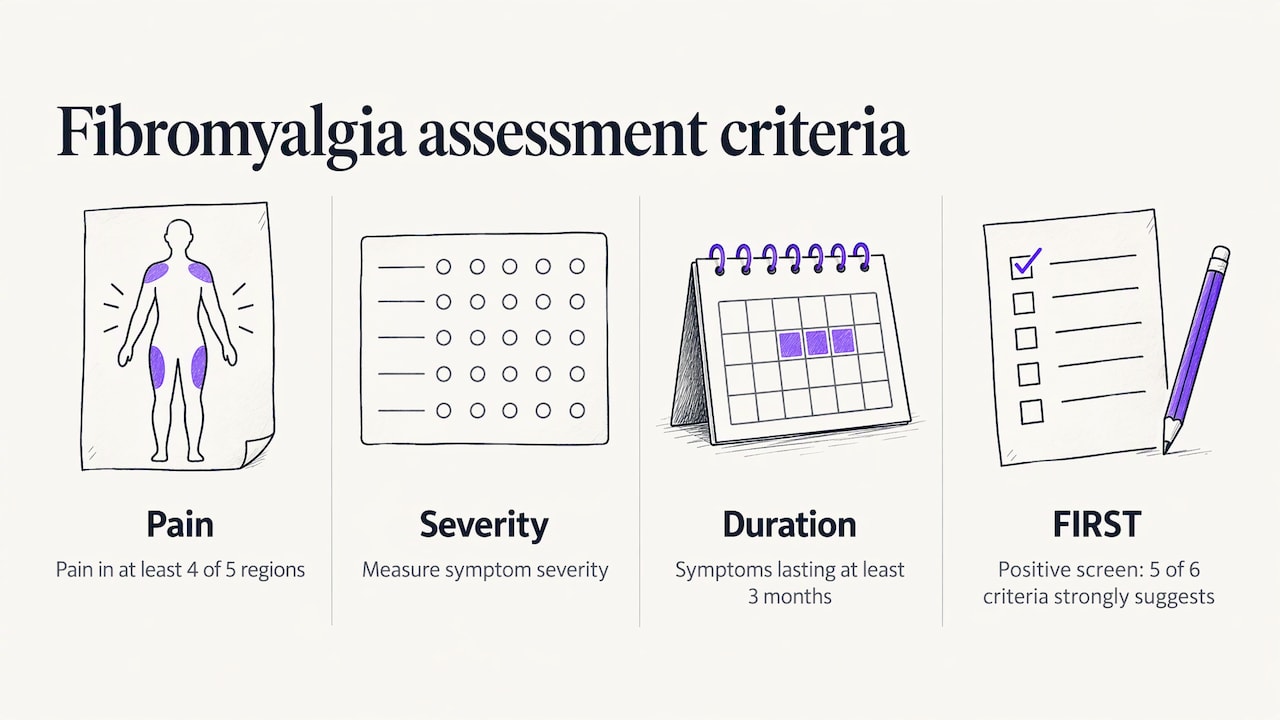
The symptoms reach well beyond pain: unrefreshing sleep, fatigue, trouble concentrating, and sensitivity to touch are common. Our checklist of early fibromyalgia symptoms can help you organize what you have noticed before you see a clinician.
A timely, thorough consultation matters here. The 2022 review on diagnosing fibromyalgia argues that early recognition depends on a comprehensive conversation, since symptoms may not fit conventional disease categories. Many people wait years for an answer, and being told repeatedly that everything looks normal adds to the toll.
This is where objective information can change the conversation. The FM1 Test looks for specific DNA genomic signatures, which our research associates with fibromyalgia and which are not found in other disorders or in healthy people. If you want to understand how results are read, see what fibromyalgia test results show and our overview of what diagnostic tests exist and what to ask.
A word from our team
We hear the same story again and again: months or years of exhaustion and pain, a stack of normal reports, and a growing sense that nobody believes it. That sense of being dismissed is a burden of its own.
We built the FM1 Test because we believe people deserve evidence they can hold in their hands. It uses DNA science to identify immune system changes related to fibromyalgia, chronic pain, and fatigue, and in positive patients it identifies specific genomic signatures. For many, that confirms what they already knew: this is a legitimate medical condition.
It also keeps the process simple. The test needs only a quick blood draw at a local facility, it is covered by Medicare and insurance, and results arrive within about a week. Patients who test positive are eligible for a no-cost clinical trial.
If you have been told your labs are normal and you still feel unwell, your next step does not have to be another wait.
the author
Ready to get an answer? Start with the FM1 Test
If your routine labs are clean and your pain and fatigue remain, the FM1 Test gives you a concrete next step. It is a blood test that uses DNA science to identify immune system changes related to fibromyalgia, chronic pain, and fatigue. You need only a quick blood draw, the test is Medicare- and insurance-covered, and results come back within about a week. People who test positive are offered a no-cost clinical trial.

You can start your FM1 Test here, or read whether a fibromyalgia test is right for you first. Healthcare providers can use the same page to facilitate an order for a patient.
What to do next, and when to seek urgent care
The NHS advises booking an appointment when fatigue has continued for a few weeks without explanation, affects daily life, or comes with other symptoms such as weight loss or mood changes. A clinician may then arrange testing or refer you to a specialist. Our guide on persistent unexplained fatigue walks through causes, tests, and next steps in more detail, and our page on when to test helps if fibromyalgia is on your mind.
A practical plan:
- Gather your lab results and your symptom record.
- See your primary care clinician and ask which causes have been checked and which have not.
- If pain is widespread and has lasted three months or more, ask about fibromyalgia and whether FM1 testing fits your situation.
- Treat sleep, mood, and medication questions as part of the workup, not a side issue.
Get prompt medical attention if fatigue comes with unexplained weight loss, a persistent fever, breathlessness or chest pain, or new weakness. A UK primary care practice lists these as reasons for urgent medical advice. In the US, call your doctor the same day, or 911 for chest pain or sudden weakness.
FAQ
Can you have real fatigue even if every blood test is normal?
Yes. Standard panels check for a limited set of common problems. Sleep disorders, medication effects, mood and stress factors, ME/CFS, nerve and autonomic problems, and fibromyalgia can all cause genuine exhaustion without abnormal routine values. A thorough history and exam are what point to the next step.
Why am I tired and in pain when my tests are normal?
Pain and fatigue often share underlying systems, including sleep, the nervous system, and the immune system. Fibromyalgia is one possible explanation, particularly when pain is widespread and has lasted at least three months. Other conditions can coexist, so a clinician should review your whole picture.
Does the FM1 Test replace a visit with my doctor?
No. It is one piece of information to bring to your care. The test needs a quick blood draw, results arrive within about a week, and you can share them with your clinician. Your doctor still looks at sleep, medications, and other conditions alongside them.
Is the FM1 Test covered by insurance?
The FM1 Test is Medicare- and insurance-covered. No price is published on our site, so the FM1 Test FAQ and the get started page are the places to confirm your coverage details.
How long should fatigue last before I see a doctor?
The NHS suggests booking an appointment when fatigue lasts a few weeks without explanation or disrupts daily life. If it comes with weight loss, fever, breathlessness, chest pain, or new weakness, seek care promptly.
Sources
- Fatigue in Adults: Evaluation and Management, American Family Physician (2023)
- Fibromyalgia: Diagnosis and Management, American Family Physician (2023)
- Tiredness and fatigue, NHS
- Fibromyalgia in adults: diagnostic management and treatment strategy, Haute Autorité de Santé (2025)
- The challenges of chronic pain and fatigue, PMC (2021)
- Common Non-Rheumatic Medical Conditions Mimicking Fibromyalgia, PMC (2024)
- The diagnosis of fibromyalgia syndrome, PMC (2022)
- Feeling Tired All the Time, Priory Medical Centre
- ADHD Meeting Fatigue: Why It Happens and What Helps