Immune System Changes: Signs, Causes and Testing

Immune system changes are shifts in how your body defends itself: a response that is too weak, too strong, aimed at the wrong target or slow to switch off. If you live with chronic pain or fatigue that no routine test explains, those shifts may be part of your story, and a DNA-based blood test such as the FM1® Test is designed to look for the immune-related signature we associate with fibromyalgia. This guide explains what immune changes are, what causes them, what symptoms to take seriously and how testing works, so you can bring clear questions to your next appointment.
TL;DR
- “Immune dysfunction” does not only mean a weak immune system. It also covers overreactions, attacks on the body’s own tissue and responses that fail to turn off.
- Common triggers include infections, medications, pregnancy, aging, inherited conditions and autoimmune disease.
- Persistent fatigue and widespread pain have many possible explanations, so a structured workup with your clinician matters.
- Research on fibromyalgia has reported altered immune signaling, including higher levels of certain inflammatory proteins called cytokines.
- The FM1 Test is a DNA-based blood test that is Medicare- and insurance-covered, needs a quick blood draw, and returns results within about a week.
Table of Contents
- What “immune system changes” actually means
- What causes the immune system to change
- Symptoms that can point to immune dysfunction
- Fatigue and the immune system
- What research says about fibromyalgia and immunity
- How immune problems are usually investigated
- Where the FM1 Test fits in
- Ready to get answers?
- Our perspective
- FAQ
- Sources
What “immune system changes” actually means
Your immune system is a network of cells, proteins and organs that recognizes threats and responds to them. The National Institute of Allergy and Infectious Diseases (NIAID) explains that immune dysfunction can arise when a response is too small for the threat, when it switches on without a threat, or when it fails to switch off after the danger has passed.
That means there are several distinct kinds of change:
- Immune deficiency: the body cannot fight infections well. It can be temporary or permanent.
- Hypersensitivity: the body reacts strongly to usually harmless substances, as in allergies.
- Autoimmunity: the body loses its tolerance of its own tissue and attacks it.
- Uncontrolled inflammation: in sepsis, for example, a flood of cytokines spreads through the whole body.
NIAID’s overview of immune-system disorders describes each of these categories. The practical takeaway is that a person can have a very active immune system and still have an immune problem. Rarely getting colds does not rule out immune involvement in your symptoms.
What causes the immune system to change
Immune deficiency can follow infections, HIV, chemotherapy, bone-marrow transplants, immunosuppressive drugs and pregnancy, or it can come from inherited genetic disorders, according to the same NIAID source. Autoimmune conditions, allergies and chronic inflammatory states fall under the other categories.
Age
Aging is one of the most common causes. MedlinePlus notes that aging can slow immune responses, reduce how well vaccines work, slow healing and lower the immune system’s ability to detect and correct cell defects. Autoimmune disorders may also develop over time. If you want to read more about how the body’s systems shift with the years, this piece on gut health and aging covers a related angle.
Illness, treatment and long-term stress on the body
A serious infection, a course of chemotherapy or a long-term medication can all leave the immune system behaving differently for months or longer. Many chronic conditions involve immune signaling as well, which is why researchers keep studying immunity in chronic pain and fatigue.
Symptoms that can point to immune dysfunction
There is no single symptom list, because the signs depend on the type of change. The American College of Allergy, Asthma & Immunology (ACAAI) lists possible warning signs that include:
- Infections that are recurrent, severe or unusual
- Infections that linger or need IV antibiotics
- Recurrent abscesses or fungal infections
- Unexplained autoimmune symptoms
- Recurrent fever with no clear cause
- Swollen lymph nodes or an enlarged spleen
- A family history of immune disorders
Cleveland Clinic adds that symptoms vary with the condition and can include fatigue, muscle aches, numbness or tingling, trouble concentrating, hair loss, rashes and drenching night sweats. Notice how many of these overlap with what people with chronic pain describe every day.
When to see a clinician
If you get infections more often than usual, if they do not improve with the usual treatment, or if they are unusual or severe, ACAAI advises considering an immunologist, a doctor who specializes in immune disorders. Mayo Clinic gives similar guidance, recommending medical evaluation for frequent, recurrent, severe or treatment-resistant infections. Seek urgent care for a high fever, trouble breathing or any sign of serious infection.
Fatigue and the immune system
Fatigue is one of the most common reasons people start asking about immunity. It is also a symptom with a long list of possible causes. A StatPearls review of chronic fatigue syndrome (ME/CFS) says evaluation should exclude anemia, thyroid dysfunction, chronic infection, autoimmune disease, sleep disorders and depression.
The same review describes ME/CFS fatigue as not relieved by rest and often worsened by exertion, with unrefreshing sleep and post-exertional malaise (a crash after physical or mental effort) as core features.
If you recognize yourself here, our guide to body aches and fatigue walks through common causes and when it is time to dig deeper. Ruling out the usual suspects is a sound first step, and it also makes any later specialized test easier to interpret.
What research says about fibromyalgia and immunity
Fibromyalgia involves widespread pain, fatigue, unrefreshing sleep and often problems with thinking and memory. For years, many patients were told their tests were normal. Immune research is changing how that conversation goes.
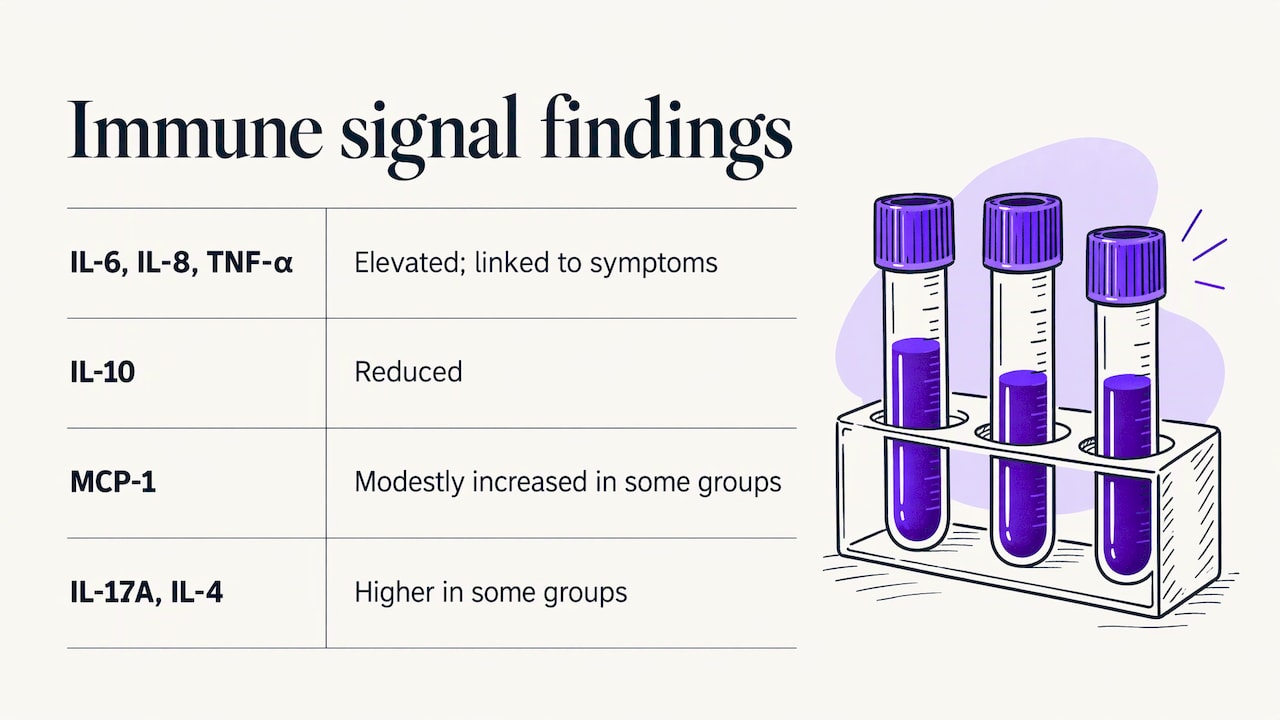
A 2025 review in Exploration of Immunology reports elevated IL-6, IL-8 and TNF-α and reduced IL-10 in fibromyalgia, with proposed roles for neuroinflammation, oxidative stress, mitochondrial dysfunction and changes in immune cells. IL-6, IL-8 and TNF-α are inflammatory messenger proteins; IL-10 helps calm inflammation.
An October 2025 review describes modestly increased IL-6, IL-8, TNF-α and MCP-1 in some groups of patients, linked in some studies to pain, fatigue and sleep disturbance. A February 2026 review comparing ME/CFS and fibromyalgia characterizes fibromyalgia as showing mild immune activation or imbalance, and reports higher IL-6, IL-17A and IL-4 in some groups.
What this means for you: your symptoms are not imagined, and the biology behind them is an active area of study. Immune signals appear to describe mechanisms and subgroups of patients, which is one reason a test that looks at the genome-level picture, rather than a single protein, is of interest.
Genes, methylation and the immune picture
Researchers are also looking at the genome itself. A 2023 reanalysis found DNA methylation differences in blood cells in fibromyalgia and chronic fatigue datasets. Methylation is a chemical tag that changes how genes are switched on and off without altering the DNA sequence. A 2026 study of 188 women found methylation patterns associated with symptom dimensions, and a smaller study reported higher OPRM1 promoter methylation in patients with ME/CFS or fibromyalgia than in controls. OPRM1 is the gene for the opioid receptor involved in the body’s own pain control.
Together, these findings show why genomic approaches are being taken seriously in chronic pain and fatigue.
How immune problems are usually investigated
If you take your concerns to a primary care doctor or an immunologist, expect a stepwise workup. A 2025 review in Clinical Reviews in Allergy & Immunology recommends starting with history and physical examination, a full blood count and immunoglobulins, checking for secondary causes, and then tailoring further tests such as lymphocyte subsets, vaccine-antibody responses and complement testing.
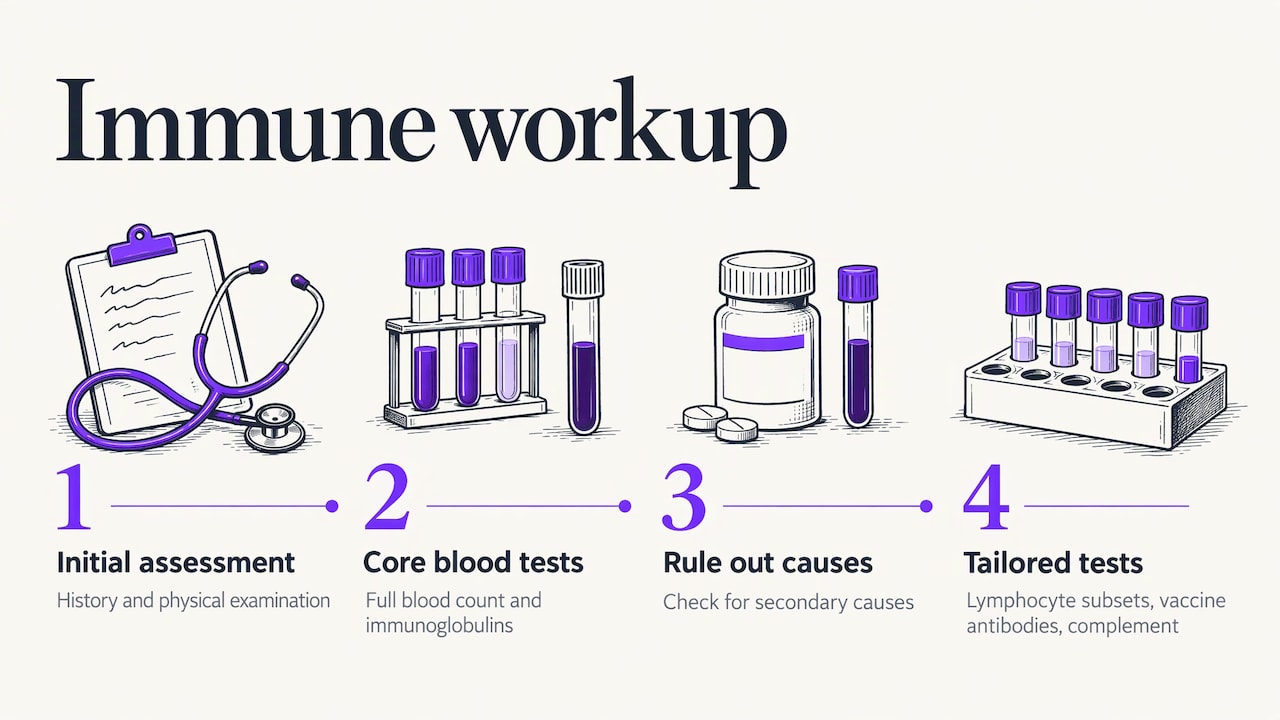
The history covers infections, medications, family history and vaccination records. Blood work can include kidney and liver function, CRP or ESR (markers of inflammation), thyroid tests and HbA1c, along with screening for chronic infection.
For suspected ME/CFS, the StatPearls review lists initial tests such as a complete blood count, metabolic and liver and renal panels, thyroid tests, CRP or ESR and creatine kinase to help exclude other explanations. Some of these tests rely on laboratory methods such as antigen and antibody tests, which detect either a piece of a germ or your body’s response to it.
These routine tests are valuable, and they are often normal in people with fibromyalgia. That is exactly the gap that frustrates patients: a clean panel does not mean nothing is wrong, and it does not give you an answer.
Where the FM1 Test fits in
The FM1 Test is a blood test that uses DNA science to identify immune system changes related to fibromyalgia, chronic pain and fatigue. Our test is designed to find specific DNA genomic signatures that we have identified in people with fibromyalgia and that are not found in other disorders or in healthy people. For a person who has spent years being told that nothing shows up, that is the point: objective evidence you can take to your clinician.
Here is how it works in practice:
- A quick blood draw. It happens at a local facility, with no special preparation described beyond the draw itself.
- Results within about a week.
- Insurance coverage. The test is Medicare- and insurance-covered, so billing can go through your plan.
- A no-cost clinical trial for positive respondents. If your result is positive, you are eligible to join.
Clinicians can use the test as one more piece of a diagnostic workup, alongside history and examination. If you want to understand what a result looks like, read what FM1 Test results show and mean. To see how testing fits into a diagnosis, see our overview of what diagnostic tests for fibromyalgia exist, or the comprehensive guide to fibromyalgia testing and results.
Who should consider testing
- You have chronic pain or fatigue and routine tests have come back normal.
- You have been told your symptoms are “just stress” and want objective information.
- You are a clinician who wants a reliable way to support a fibromyalgia diagnosis.
Not sure about timing? Our page on seeking a fibromyalgia diagnosis and when to test helps you decide.
Ready to get answers?
The FM1® Test gives you a clear, DNA-based result from one blood draw, billed to Medicare or your insurance, with results in about a week. Positive respondents are eligible for a no-cost clinical trial. Start at our get started page, or read the FM1 Test FAQ first, or visit fm1test.com.

Our perspective
For too long, people with fibromyalgia have walked out of appointments with normal results and no explanation. We believe the immune system is part of the answer, and that patients deserve evidence they can hold in their hands.
That is why the FM1 Test looks at DNA genomic signatures rather than a single symptom or a single protein. Our test is designed to identify signatures that are not found in other disorders or in healthy people, which supports the view that fibromyalgia is a legitimate medical condition and not just a syndrome of unexplained complaints.
We built it to be simple: one quick blood draw at a local facility, results in about a week, and coverage through Medicare and insurance. And for those who test positive, we offer access to a no-cost clinical trial, because validation should lead somewhere.
the author
FAQ
Does fibromyalgia affect the immune system?
Research has reported altered immune signaling in fibromyalgia, including higher levels of cytokines such as IL-6, IL-8 and TNF-α. These shifts are thought to interact with the nervous system and may relate to pain, fatigue and sleep problems. The FM1 Test looks at DNA genomic signatures tied to these immune-related changes.
Can fatigue be a sign of immune system problems?
It can be, but fatigue also has many other causes, such as anemia, thyroid problems, sleep disorders and depression. A clinician can check these with routine blood work. If everything comes back normal and the fatigue persists, further testing such as the FM1 Test is a reasonable next conversation.
Which symptoms suggest immune system dysfunction?
Recurrent, severe or unusual infections, swollen lymph nodes, recurrent unexplained fever and unexplained autoimmune symptoms are among the signs listed by immunology specialists. Fatigue, muscle aches and trouble concentrating can also occur. See a doctor promptly if infections are frequent or hard to treat.
Is the FM1 Test covered by insurance?
The FM1 Test is Medicare- and insurance-covered. You can read more on the FM1 Test FAQ, and you can begin from the get started page.
Sources
- NIAID: Overview of the Immune System
- NIAID: Disorders of the Immune System
- MedlinePlus: Aging changes in immunity
- ACAAI: When Should You See an Immunologist?
- Mayo Clinic: Primary immunodeficiency
- Cleveland Clinic: Immune System Function, Conditions & Disorders
- StatPearls: Chronic Fatigue Syndrome
- Exploration of Immunology: Fibromyalgia syndrome and the immune system
- In Search of Molecular Correlates of Fibromyalgia
- ME/CFS and fibromyalgia immune review, 2026
- DNA Methylation Changes in Blood Cells of Fibromyalgia and CFS
- Epigenome-wide profiling of DNA methylation axes, 2026
- Hypermethylation of OPRM1, 2026
- Immunodeficiencies in Adults: Key Considerations
- Gut microbiome and aging
- Antigen vs antibody tests